
Mini Fridge Repair in Olathe, KS
Mini fridges live hard lives. They get stuffed in dorm rooms, office break areas, garages, and Airbnb suites, then run for years without a thought. When one quits, it is still worth a professional look before you haul it to the curb — many mini fridge failures are cheap fixes. We are Olathe Refrigerator Pros, and our own technicians service mini fridges across Olathe and Johnson County for homes, offices, and rentals. If the same problem returns within 3 days of our repair, we come back and re-repair it free. Call (913) 412-0164 — we answer 24/7.
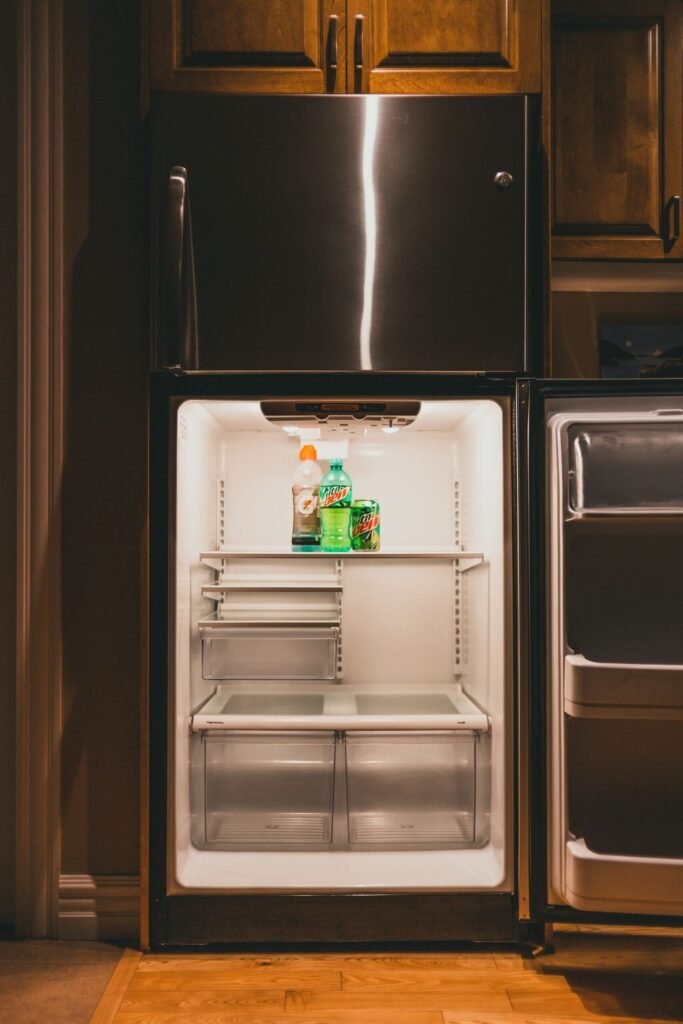

What Are the Most Common Mini Fridge Problems?
Mini fridges fail in the same ways big fridges do, just on a smaller scale. The most common: a thermostat that was bumped to ‘off’ or has failed (check the dial first — it happens constantly in shared offices). A failed start relay or overload protector, announced by clicking every few minutes. A door gasket that no longer seals — mini fridge gaskets are thin and wear fast, and a leaking one makes the unit run forever. Dirty condenser coils, which on minis are often a flat panel on the back that nobody ever cleans. And the sealed system: a slow refrigerant leak or a dying compressor, which on a mini fridge is usually the end of the road financially. Thermoelectric (Peltier) minis — the silent ones with no compressor — fail differently: their cooling modules weaken with age and cannot be meaningfully repaired. Knowing which type you have determines whether a repair makes sense.
Why Is My Mini Fridge Freezing Everything?
Two causes, both common. Someone bumped the thermostat dial to its coldest setting — mini fridge dials are vague (1 to 7, no temperatures) and get knocked during cleaning. Or the thermostat itself has failed stuck-closed, calling for cooling nonstop. Less often, the door is not sealing and the unit is overcompensating. Check the dial first, then the gasket with the dollar-bill test. If both check out, the thermostat needs testing — a $150-ish repair that we do regularly.
How Does a Mini Fridge Actually Work — and Why Does It Struggle?
A mini fridge is a full refrigerator shrunk down: a compressor, condenser, capillary tube, and evaporator, plus a thermostat and start components. The difference is margin — everything is smaller, cheaper, and built to a price. The compressor is tiny and has no reserve capacity, so dirty coils or a hot room push it to its limit fast. The thermostat is a crude dial, not a digital control, so temperature swings are wider. The door gasket is a thin magnetic strip that wears quickly. And thermoelectric models skip the compressor entirely, using a Peltier module that moves heat electrically — silent, but weak, and they only cool about 30 to 40°F below ambient. In an 85°F Olathe garage in July, a thermoelectric cooler holds 50°F at best — not food-safe. That is the mechanism behind most ‘my mini fridge does not get cold’ complaints in summer: the technology cannot beat the ambient temperature.
Thermoelectric vs. Compressor: Does It Matter for Repair?
A thermoelectric (Peltier) cooler has no compressor, no refrigerant, and no moving parts except a fan — it is silent and cheap. A compressor mini fridge is a real refrigerator in miniature. Compressor models cool far better, hold food-safe temperatures in hot rooms, and last longer. Thermoelectric models are fine for beverages in a climate-controlled office; they are not food-safe in a hot garage and they cannot be economically repaired when the module weakens. If you are buying new for food storage, buy compressor. If we are repairing yours, we will tell you which type you have and what that means for the repair decision.
How Does Our Technician Fix Mini Fridges?
Our diagnosis is quick because mini fridges are simple. We check the thermostat dial setting and test the thermostat’s actual function — a thermostat stuck open or closed is a common, cheap fix. We test the start relay and overload protector, because clicking with no cooling is the classic relay failure and a $125 to $200 repair. We check the door gasket seal and the condenser coils (unplug, vacuum — safe for you to do too). We verify the compressor is actually running and drawing normal current. For sealed-system suspects, we are honest about the economics: a compressor or leak repair on a mini fridge usually costs more than the unit is worth, and we will tell you so rather than sell you the job. You get a written estimate before any work begins, and the final price is confirmed after diagnosis.
Do You Service Mini Fridges in Offices and Airbnb Rentals?
Yes — offices, break rooms, Airbnb suites, dorms, and rental properties across Olathe. We see a lot of mini fridges in commercial settings where they run 24/7 for years without maintenance. For property managers and Airbnb hosts, a dead mini fridge is a guest-complaint emergency, and we treat it that way. We also service the landlords and property managers directly — see our landlord fridge repair page for how we work with rental properties.
When Should You Call Us About a Mini Fridge?
A mini fridge full of medication (insulin is the big one), breast milk, or lab samples is urgent — call us the same day. A break-room fridge full of employee lunches is a next-day job. A dorm fridge with nothing perishable in it can wait for a scheduled visit. The food-safety clock still applies: about 4 hours above 40°F (USDA, door closed) for perishables. If the mini fridge is clicking repeatedly or smells hot, unplug it — a failing start relay can overheat. We are available 24/7 at (913) 412-0164.
Are Mini Fridges in Rentals More Failure-Prone?
Yes — mini fridges in rentals and offices get abused: doors left open, dials cranked to max, coils never cleaned, units shoved against walls with no ventilation. For Airbnb hosts, we recommend a quick quarterly check — gasket, dial setting, coil vacuuming — because a dead mini fridge is a one-star review. We offer maintenance tune-ups that cover mini fridges too.
What Are the Dangers of a Failing Mini Fridge?
The electrical risks are the same as a big fridge in miniature: a failing start relay or shorted thermostat can overheat wiring, so unplug the unit if you smell burning or hear repeated clicking. Never bypass the thermostat or run the compressor directly — that is how motors burn out and wiring melts. The sealed system contains refrigerant (often R-600a, flammable, on newer minis) — never puncture the lines, never add refrigerant yourself (federal law requires EPA 608 certification), and never chip at ice with sharp tools. Food safety applies at any scale: a mini fridge holding 50°F is not preserving food, it is incubating bacteria. When in doubt, throw it out.
A Note on Refrigerant Safety
Mini fridges use the same refrigerants as big fridges — increasingly R-600a (isobutane), which is flammable. Our EPA 608 certified technicians handle sealed-system work with the proper precautions. This is one more reason the sealed system is never a DIY job, at any size.
How Much Does Mini Fridge Repair Cost in Olathe?
Mini fridge repairs typically run $125 to $300 in 2026: thermostats, start relays, and gaskets are the common jobs, all affordable. We charge a diagnostic fee because proper diagnosis saves you from replacing a fridge over a $150 part — and the fee is applied toward the repair when you approve the work. We give you a written estimate before any work starts, and the final price is confirmed after diagnosis, never guessed over the phone. Our warranty applies: if the same problem returns within 3 days of our repair, we come back and re-repair it free. See our refrigerator repair cost guide for context.
Do You Charge a Diagnostic Fee for Mini Fridges?
Because a $40 guess at the wrong part is how mini fridges end up at the curb. Proper diagnosis distinguishes a $150 thermostat from a dead sealed system — and when it is the sealed system, we tell you to replace the unit rather than selling you a repair that costs more than a new fridge. The diagnostic fee buys you an honest answer, applied toward the repair if you proceed.
How Can You Prevent Mini Fridge Problems?
Vacuum the condenser coils (or back panel) every 6 months with the unit unplugged — dust is the #1 killer of mini fridge compressors. Do not push the unit flush against the wall; it needs a few inches of breathing room. Check the thermostat dial monthly in shared spaces — it gets bumped constantly. Dollar-bill test the gasket twice a year. Keep it reasonably full; thermal mass stabilizes temperatures. Do not use it in an unheated garage or a 100°F shed unless it is rated for those conditions. And defrost manual-defrost models before the ice gets thick — never chip it with sharp tools. These five habits double a mini fridge’s life.
What Parts Are Involved in Mini Fridge Repair?
The parts we service on minis: thermostat, start relay, overload protector, door gasket, condenser fan (if equipped), and the sealed-system components — compressor, filter-drier, refrigerant — when the economics justify it. Thermoelectric models have a Peltier module and control board instead; when those fail, replacement is usually the answer and we will tell you straight.
Is It Worth Repairing a Mini Fridge?
Apply the 50% rule at mini scale: if the repair is under half the cost of a comparable new mini fridge and the unit is under 8 years old, repair it. A $150 thermostat on a $300 mini fridge passes. A sealed-system repair quoted at $400 on a $250 dorm fridge does not — buy new. Thermoelectric models: when the cooling module weakens, there is no economical repair; replace. We will run the numbers with you and give you a straight recommendation — we would rather earn your trust with honesty than sell you a repair that does not pencil out. Our repair vs replace guide covers the framework.
When Should I Replace Instead of Repair?
Replace instead of repairing when: the sealed system has failed on a unit worth under $400, the thermoelectric module has weakened, the cabinet is rusted through, or the unit is over 10 years old with multiple issues. Repair when: it is a thermostat, relay, gasket, or fan issue on a unit under 8 years old. When in doubt, pay for the diagnosis — it is cheaper than guessing wrong in either direction.
What Can I Safely Check Myself?
Safe DIY on a mini fridge: checking and adjusting the thermostat dial, vacuuming the coils with the unit unplugged, dollar-bill testing the gasket, and confirming the outlet and breaker. Not safe: bypassing the thermostat, replacing start components if you are not comfortable with electrical work, or anything involving the sealed system or refrigerant — federal law requires EPA 608 certification, and R-600a is flammable.
Frequently Asked Questions
My mini fridge light is on but it is not cooling. What is wrong?
The light runs on the door switch circuit, but cooling runs on the thermostat and compressor circuit — they are independent. Light-on-but-not-cooling usually means a failed start relay, a dead thermostat, or a compressor that is not starting. Check that the temperature dial was not bumped to off, then call us. We test the start components first because a $125 to $200 relay repair beats a replacement.
How long do mini fridges usually last?
Typically 8 to 12 years for a compressor mini fridge with decent care. Thermoelectric (Peltier) models last about 5 to 8 years and cool weakly by design. The sealed system is usually what ends them — and sealed-system repair on a mini fridge rarely makes financial sense, which is why we diagnose honestly and tell you when to replace.
Can I keep a mini fridge in my Olathe garage year-round?
Only if it is rated for it, and most are not. In winter, an unheated Olathe garage drops below the temperature the thermostat expects, so a compressor mini fridge may never cycle and its contents thaw — or freeze, if it is beverages you wanted cool. In summer, a 100°F garage makes it run nonstop. Dorm-style minis belong indoors. Our winter garage fridge guide explains the garage problem in detail.
Why is my mini fridge so loud all of a sudden?
New loudness usually means the compressor is struggling — often dirty coils, a failing start relay, or the unit running nonstop because the door seal is leaking. Mini fridges are not silent, but a sudden change in volume or a new rattling/buzzing is a warning. Unplug it if the noise is accompanied by clicking or a burning smell, and call us.
Do you warranty mini fridge repairs?
Yes. If the same problem returns within 3 days of our repair, we come back and re-repair it free. Mini fridge repairs are usually simple — thermostats, relays, gaskets — and we verify temperatures before we leave.
Is it worth repairing a mini fridge?
It depends on the numbers. A $150 thermostat or relay repair on a $300 mini fridge that is otherwise healthy makes sense. A sealed-system failure on a 10-year-old dorm fridge does not — put the money toward a new one. Our rule: if the repair is under half the cost of a comparable new mini fridge and the unit is under 8 years old, repair it. We will do the math with you honestly.