
Refrigerator Making Loud Buzzing or Rattling Noises
Is your refrigerator making loud noise — buzzing, rattling, humming, or gurgling that you can hear across the room? Some fridge sounds are normal; others are early warnings of a failing part. We are Olathe Refrigerator Pros, and our own technicians diagnose noisy refrigerators across Olathe and Johnson County. If the same problem returns within 3 days of our repair, we come back and re-repair it free. Call (913) 412-0164 — we answer 24/7.
Why Is My Refrigerator Making Loud Noises?
Refrigerators make noise — the question is which noises are normal and which are warnings. Normal: a smooth hum when the compressor runs, occasional gurgling as refrigerant flows, clicks when the compressor cycles on and off, and the whoosh of the defrost cycle. Warning sounds: loud buzzing from the back (struggling compressor or failing condenser fan), rattling (loose panels, unlevel fridge, vibrating drain pan), grinding (ice maker ejector struggling, or a fan blade hitting ice), high-pitched squealing (fan motor bearings dying), and repetitive clicking (failed start relay — the compressor is not starting). New, louder, or changed sounds deserve attention: a fridge that was quiet for years and suddenly buzzes is telling you something changed. Our rule: noise plus normal cooling is usually mechanical and can wait for a scheduled visit; noise plus warming is urgent.
Which Fridge Noises Are Normal?
A smooth compressor hum, refrigerant gurgling, soft clicks at cycle changes, and occasional defrost sizzling are all normal. Modern fridges are quieter than old ones, so owners notice normal sounds more. What is NOT normal: loud buzzing, grinding, squealing, repetitive clicking, or any sound that is new and much louder than before. When in doubt, record a 10-second video of the sound — it helps us diagnose before we arrive.
What Does a Buzzing Noise From the Back Mean?
Buzzing from the back of the fridge has three usual sources. A struggling compressor buzzes louder as it works harder — often from dirty coils or high ambient heat making it run hot. A failing condenser fan motor buzzes or hums loudly as its bearings wear out; you can sometimes feel the vibration on the back panel. And simple vibration: the fridge touching the wall, an unlevel unit, or a loose drain pan amplifies normal hum into an annoying buzz. The diagnostic trick: pull the fridge away from the wall slightly — if the buzz drops, it was vibration; if it stays, it is the compressor or fan. A buzz that is new, loud, and constant deserves a service call before the underlying part fails.
How Do Different Fridge Noises Happen?
The mechanism depends on the sound. Fan noise: the evaporator or condenser fan motor bearings wear out after years of spinning, and the worn bearing buzzes, squeals, or rattles — worse when the fan runs. Compressor noise: as compressors age or overwork, internal wear makes them louder; a compressor running hot from dirty coils buzzes noticeably. Ice maker grinding: the ejector arm strains against ice buildup (Samsung’s freeze-up pattern is notorious for this) or a failing module motor grinds. Rattling: panels loosen over years of vibration, the drain pan sits unevenly, or the fridge is unlevel and rocks. Refrigerant gurgling: liquid refrigerant moving through the capillary tube — normal physics, not a problem. Each sound maps to a part, which is why describing the sound accurately (or recording it) speeds up our diagnosis.
How Do We Diagnose and Fix Noisy Refrigerators?
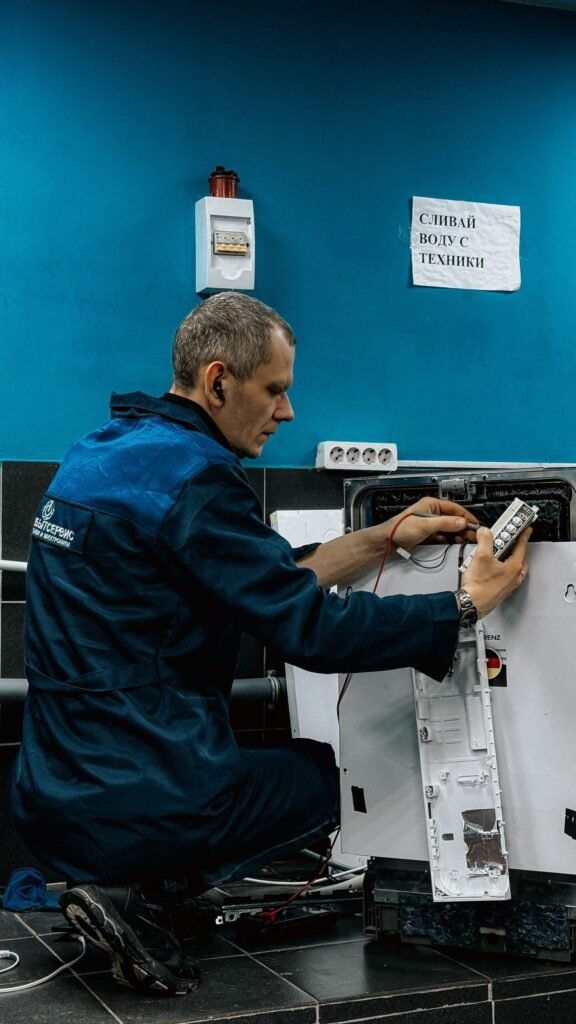
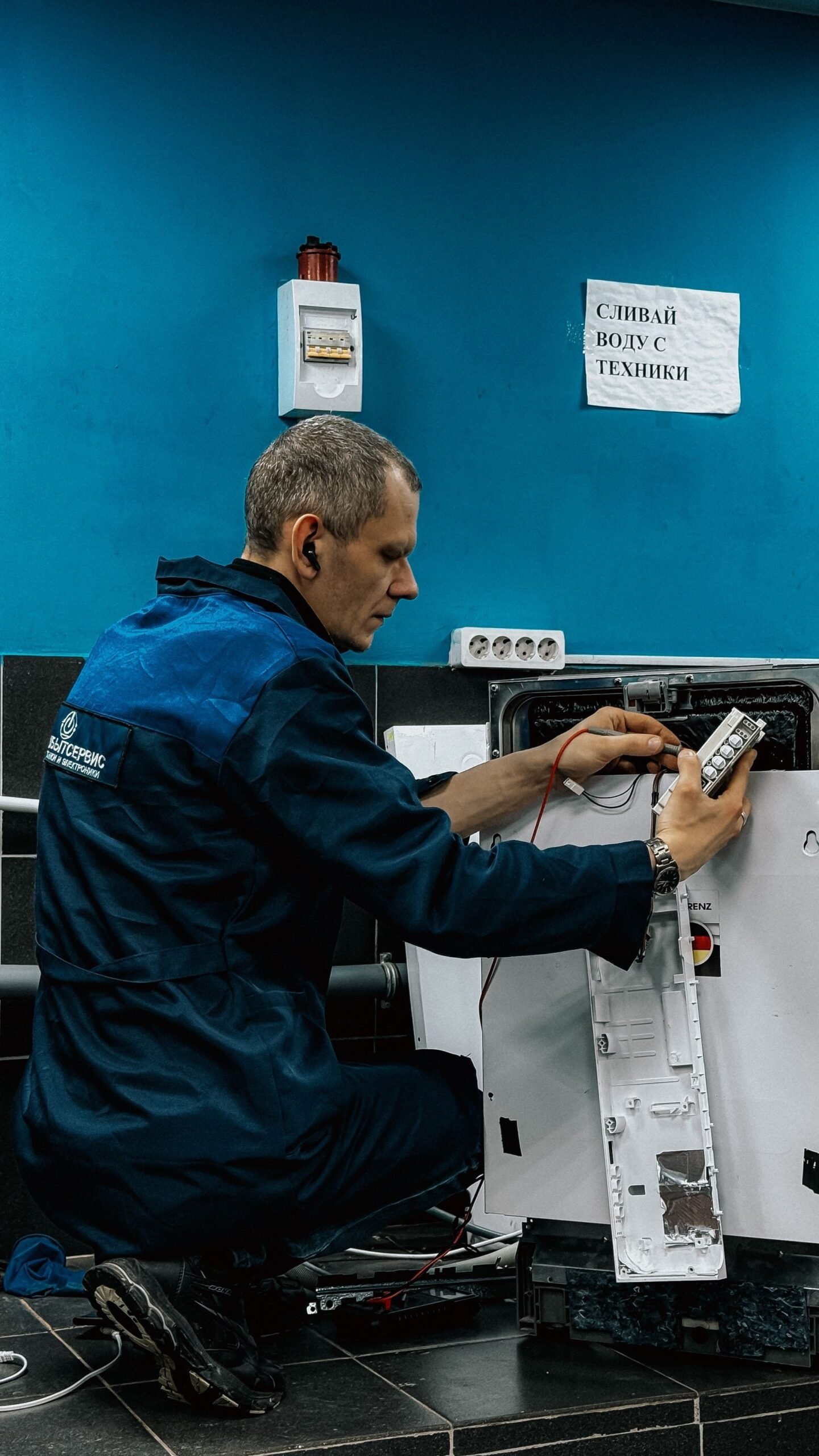
We listen first — the sound tells us where to look. Then we check the simple things: is the fridge level, is it touching the wall, are the panels tight, is the drain pan seated? Next we isolate the fans: the condenser fan (back/bottom) and evaporator fan (freezer) each get tested — a fan that is loud when spun by hand has bad bearings. We check the compressor’s sound and current draw against normal. For ice maker grinding, we inspect the ice maker compartment for ice dams and module wear. The fix matches the cause: fan motor replacement ($200 to $300), leveling and panel tightening, ice maker service, or compressor diagnosis if the sound points there. You get a written estimate before any work begins, and the final price is confirmed after diagnosis.
What Can I Check Myself Before Calling About Noise?
Check that the fridge is level (adjust the front feet) and not touching the wall or cabinets — vibration against a wall amplifies every sound. Tighten any visibly loose panels or handles. Make sure the drain pan underneath is seated properly. Vacuum the condenser coils with the fridge unplugged — a cooler-running compressor is a quieter compressor. For ice maker grinding, check for ice buildup around the ice maker and clear the bin of clumped ice. Do not oil fan motors, do not bend fan blades, and do not open any panels beyond the coil access — if the noise persists after the simple checks, call us. Record a short video of the sound; it helps enormously.
When Is Fridge Noise Dangerous?
Most noise is harmless — but some is not. Unplug the fridge and call us immediately if: the noise is accompanied by a burning smell (overheating component or wiring), there is repetitive clicking (failed start relay — the compressor is not starting), or the noise started suddenly with cooling loss. A failing fan motor left too long can overheat; a struggling compressor left too long can seize. And never ignore a new loud noise on a fridge that is also warming — the 4-hour food-safety clock (USDA, door closed) applies. Noise alone, with normal cooling, is a scheduled-visit issue; noise plus warming is urgent.
How Much Does It Cost to Fix a Noisy Refrigerator?
Most noise repairs run $150 to $300 in Olathe in 2026: fan motors $200 to $300, ice maker service $200 to $400, leveling and vibration fixes minimal. If the noise traces to a failing compressor, sealed-system replacement runs $700 to $1,250 — and we will run the 50% rule with you honestly. We give you a written estimate before any work starts, and the final price is confirmed after diagnosis, never guessed over the phone. Our warranty applies: if the same problem returns within 3 days, we come back and re-repair it free. See our cost guide.
How Can You Prevent Fridge Noise Problems?
Keep the fridge level — check yearly, as floors settle and feet shift. Vacuum the condenser coils every 6 months with the fridge unplugged; a cool compressor is a quiet compressor. Do not push the fridge against the wall; maintain airflow clearance. Replace the water filter every 6 months so the ice maker is not straining. Address new sounds promptly — a $200 fan motor caught early never becomes a $900 compressor. Schedule a yearly maintenance tune-up: we check fan motors, the compressor’s sound and current draw, and the ice maker before small noises become big failures.
Is It Worth Fixing a Noisy Fridge?
Apply the 50% rule: a $200 fan motor or $300 ice maker service passes on any working-age fridge. Noise alone rarely justifies replacement — fix the part. Replacement enters the picture only if the noise means a dying compressor on a 12+ year old unit. Our repair vs replace guide has the framework.
What Parts Are Involved?
Evaporator fan motor, condenser fan motor, ice maker assembly and module, start relay and overload protector (for clicking), compressor (for deep buzzing/humming), drain pan, and leveling hardware. We carry the common fan motors on our trucks — most noise calls finish the same visit.
Frequently Asked Questions
Why is my refrigerator making a loud buzzing noise?
A loud buzz usually comes from the back: a struggling compressor, a failing condenser fan motor, or the fridge vibrating against the wall. If the buzz is new and loud, check that the fridge is level and not touching anything — then call us if it persists. A buzz accompanied by clicking or a burning smell means unplug and call immediately.
Is a rattling refrigerator dangerous?
Rattling is annoying but rarely dangerous — usually loose panels, an unlevel fridge, or the drain pan vibrating. The exception: rattling combined with clicking (failing start relay) or a burning smell (overheating component). If it is just rattle with normal cooling, it can wait for a scheduled visit; if cooling is affected, call promptly.
Why does my fridge gurgle?
Gurgling is refrigerant flowing through the capillary tube — completely normal, especially after the compressor cycles. You will hear it more in quiet kitchens. It only matters if it is new, very loud, or accompanied by cooling loss — then it could indicate a developing sealed-system issue worth checking.
Can a noisy fridge still cool properly?
Often yes — a noisy fan or a vibrating panel does not affect cooling at all. But noise plus warming is a different story: a failing evaporator fan or a struggling compressor makes noise AND loses cooling. If temperatures are holding at 37 to 40°F, the noise is likely mechanical; if food is warming, call us promptly.
How long does a fridge noise repair take?
Noise diagnosis takes 30 to 60 minutes; most fixes (fan motors $200 to $300, leveling, panel tightening, ice maker service) are same-visit. We carry common fan motors on our trucks across Olathe.